Thursday, April 14, 2016

Science + Theater + Diversity Conference with the Catalyst Collaborative at MIT

By E Rosser


This Sunday, I sat down with a quantum physicist-slash-director on my right, and a playwright who works with telescopes on my right.  A slew of other participants, ranging from theater interns, to history students, to neuroscientists, to engineers circled their chairs around the room.  Together, we represented a broad range of interests and backgrounds, but today we were there to tackle our favorites: theater, science, and diverse representation.  After introductions, ample coffee, and some question brainstorming, we dug right into group dialogue, wondering how theater might effectively capture the scientific process, and how science, in turn, might be progressed by featuring in theater.  That dialogue was the central component of Sunday’s Science + Theater + Diversity Conference, hosted by the Catalyst Collaborative at MIT and the companies in residence at the Central Square Theater.

Photo courtesy of Allison Schneider


The CC@MIT is the only long-term collaboration venture between a professional theater and a research institution like MIT.  Through theater that focuses on the seldom-told stories of science, CC@MIT seeks to not only bring the thrilling narrative of discovery to the public eye, but also spark an ongoing science dialogue.  Founded by local theater pro Debra Wise, playwright and MIT theater arts professor Alan Brody, and his colleague Janet Sonenberg, the Collaborative aims to produce at least one science play per season.  The colorful posters that lined the hallways of the theater speak to the variety of their past works, all classics of science-based theater: A Disappearing Number, Q.E.D., Photograph 51, and Einstein’s Dreams, based on the book by artistic co-director Alan Lightman.  Debra Wise, the moderator of the conference’s discussion, proudly rattled off these titles, but noted how “we’re running out of good science plays!”  The Collaborative seeks to fill that void, especially with under-represented voices, by commissioning scripts from minority playwrights through their Untold Stories: Catalyst 2024 program-- or ”young nerds of color,” as Wise playfully called the series.  The next installment will be announced at an upcoming CST Gala, and produced during the theater’s next season.


Next came presentations by several conference attendees.  Alona R. Bach offered a preview of her upcoming thesis play about female electrical engineers in British history.  Sami Harper and Neerja Aggarwal gave a presentation about Now Then Again, their inaugural play with ETC, MIT’s student Experimental Theater Company.  Jasmine Florentine, an artist and mechanical engineer, pitched a concept for Hex Allen, her lushly-illustrated story about engineering geared to inspire girls to explore STEAM activities.  Rounding out the discussion with some topical science, lighting designer Allison Schneider drew connections between optics, physics, and theater lighting effects.


Photo Courtesy of Allison Schnieder


After the presentations, we sat down with a panel of several accomplished science communicators:  Rhodes scholar, musician, mathematician, and science historian Anya Yermakova; Alan Brody, playwright of last season’s Operation Epsilon; and frequent director at CST Lee Mikeska Gardner.  Science and art, they agreed, weren’t always subject to the same rigid division we see today, and once coexisted in intellectual circles.  Just as philosophy is meant to be lived rather than simply studied, Yermakova remarked, science can and should be put on stage, rather than keeping it in the classroom.

The conference concluded with a matinee performance of CC@MIT’s latest production, the Tom Stoppard staple Arcadia.  Stay tuned for a full review...or head to Central Square Theater to check out a performance yourself!


---------------------------

E. Rosser is a science writer and mechanical engineer currently wrapping up a degree at MIT. As a designer and theater enthusiast, she's left this conference excited to start making more science theater! She was honored and thrilled to be part of the Conference discussion, and thanks the staff of the Central Square Theater for organizing it.

Wednesday, April 13, 2016

Curiosity Challenge: How do Cells Work?

Hi Jollie, thanks for the question. This is a hard question to answer because cells are so different from each other. Cells are specialized to do the job they perform. Nerve cells look completely different than liver cells and perform a different function within the body. Also animal, plant, and bacterial cells all differ from one another. To answer your question I’m going to focus on the general principles that enable animal cells to function.

Cells were initially discovered (observed) following the invention of microscopes in the 17th century.  Cell theory, stating that cells form the fundamental unit of life, was put forward over 150 years later. In the 20th and 21st centuries a major goal of biological research has been to understand how cells work, so that we can recognize what goes wrong in disease and how best to intervene to cure the condition. The working of individual cells can be summarized basically as follows:

1.     Proteins do the work of the cell. They perform the function of the cell whether that’s to send an electrical signal along a nerve fiber, or to detect invading pathogens as part of the immune system. These functions occur via enzymatic reactions that require energy.
The central dogma of biology,
which describes how DNA encodes protein assembly.
From NCBI Molecular Biology Reviews.
2.     Cells get their energy by converting sugars (glucose) into ATP (adenosine triphosphate) in specialized structures called mitochondria. ATP is a carrier of energy and it’s used in lots of different enzymatic reactions where its breakdown releases the stored energy and enables the reaction to occur.
3.     Where do proteins come from? Simply from DNA. DNA contains small units called genes, which provide the information or code required to tell the cell how to make proteins out of individual building blocks (amino acids). By turning on one set of genes and turning off another set of genes, cells acquire specialized functions so that a liver cell looks and functions differently from a nerve cell.


So we know a lot about how a cell works. But would it surprise you if I told you that only last month (March 2016) scientists reported the design of the first cell to contain the minimal number of genes that support cell growth and replication. Of the 473 genes required to generate the simplest cell, scientists know the function of only 324 of those genes. This synthetic cell was a bacterial cell and far less complex than human cells, which have approximately 20,000-25,000 genes. The Human Genome Project provided the full sequence of human DNA in 2003 (the first draft was released in 2001).  Since then, scientists all over the world have been trying to translate that information to identify all the genes in the human genome, the function of the proteins they encode, and how these genes are controlled, such as in the ENCODE project. This information will help scientists discover how cellular function becomes disrupted in disease and will hopefully provide the means to design targeted therapies to combat those conditions.

Find out more about the biology of cells and organisms at the Cambridge Science Festival!

  • Build Your Own Living Organism: Bioengineering for Everyone (two-day workshop) at the EMW Community Space, 934 Massachusetts Ave., Cambridge. Saturday, April 16, from 1-5pm, and Sunday, April 17, from 1-3pm.  Bioengineering allows us to speed up the evolution process!  Build your own living organism during this introductory two-day workshop for ages 10+.  Pre-register at http://bit.ly/1OPVVdR.
  • CELL @ Novartis Open House - Check It Out! at CELL@Novartis, 22 Windsor St., Cambridge, April 21st 1-4pm and April 23rd 10am-2pm. Through hands-on experimentation and minds-on problem solving, our programs aim to develop technical skills, build confidence, and open a world of possibilities for students to explore biomedical research and STEM.


--------
Karen Featherstone is a research scientist specializing in molecular and cell biology. Karen’s Ph.D and post-doctoral research investigated how DNA is regulated and how this determines cell function. 

Tuesday, April 12, 2016

Curiosity Challenge: How Can Lizards Regrow Body Parts?


You may know that some animals, such as reptiles and amphibians, can grow back lost body parts, but how do they do that?

Image via Wikimedia Commons

The process that allows animals, such as reptiles, to grow back their lost body parts is called regeneration. In order to understand regeneration, we must learn about DNA and gene regulation. Every living organism, from bacteria to plants, and including humans, are made up of cells. Cells are known as the smallest unit of living things. Cells are really small, and you need a microscope to take a close look at them. In fact, the human body is made up of trillions of cells! 

You may also know that DNA is called the genetic material in our cells. DNA stands for deoxyribonucleic acid, and it contains instructions for our cells. DNA is made up of nucleotides. We have four DNA nucleotides: adenine, thymine, guanine, and cytosine. The specific order of these nucleotides makes up our genetic material, and “packets” of DNA are called genes. You might hear that you get two copies of a gene, one from your mom, and one from your dad. Everybody’s DNA is different because we all have different copies of genes—this make us all unique!

Cells are the smallest units of living things. DNA is the genetic material in cells, and it is contained inside the cell's nucleus. DNA contains genes with instructions for our cells. DNA is composed of four different nucleotides, and the order of the nucleotides makes us all unique.
When lizards lose their tails, genes are turned on or off that allow them to grow back their tails. Scientists have discovered 326 genes important for tail regeneration. Some of these genes are also turned on during the development of the baby lizard (embryogenesis), and during wound healing. Scientists have found that genes in two complex signaling pathways known as Wnt and MAPK are important for lizard tails to grow back. These two pathways are important for making sure that cells are taking care of themselves. For example, when these pathways are not functioning properly, diseases such as cancer can occur.

Scientists believe that when lizards regenerate their tails, cells become “dedifferentiated.” This means that the cells near the injury become more like stem cells, and can be "programmed" to help grow back the tail. This process involves a lot of different genes, and regulation of these genes is what allows the lost body parts to grow back! Some genes are turned on, and some are turned off.

Being able to regenerate lost tails can be very helpful for lizards trying to escape predators. Lizards can control when to shed off their tails in a behavior known as autotomy. When a lizard feels it is in danger, it can shed its tail as a self-defense mechanism. The lost tail distracts the predator, and it allows the lizard to flee.

One thing to keep in mind is that limb regeneration takes time. The process can take weeks or months for lizards. Regeneration is a very interesting topic, but it is not just for lizards. For example, starfish can also grow back their arms!

Image via Wikimedia Commons
Although you may see lizards grow back their tails all the time on TV, scientists in real life are studying how lizards can regenerate their limbs in order to improve medicine! Hopefully this type of work can help scientists and doctors perform more advanced surgeries and discover better treatments for diseases.

Further Reading

--------------

Kenny Chen is a research assistant at MIT earning his PhD in Chemistry. He enjoys biomedical research and is curious about genes and biological processes.

Monday, April 11, 2016

Curiosity Challenge: How Were Animals Created?


Hi there CSF followers, fans, and supporters!


Anna Bishop here again, answering an awesome biology question from Ava Hartshorn, Age 7: How Were Animals Created?
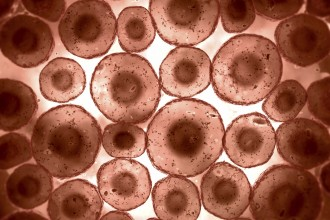
( a picture of animal cells under a microscope)


Well, it all started about 575 million years ago, a time called the Ediacaran Period, when primitive animals began to develop. Lumps of cells probably weren’t what you were thinking of when you thought of animals! But lumps of cells created the first animals on Earth. There are three educated guesses about how this happened.

Sunday, April 10, 2016

Curiosity Challenge: Who Taught the First Teacher?

 
Great question Onasis. The most straight forward answer I can give is: their parents.

Teaching and learning in its earliest form would have occurred by imitation.  Our early ancestors would have imitated their parents, just like animals on nature TV shows imitate their parents' hunting and survival skills.  The acquisition of language and the generation and use of tools enabled the initial advancement of the human species from small groups of nomadic hunter-gatherers to larger agricultural communities, in what is termed the Neolithic Revolution. The benefit of agricultural food production to the individual health in these communities is not entirely clear.  But, ultimately, these communities supported larger populations. The development of larger communities led to the specialization of skills and roles within the community, for example farming, building, and trade. These communities developed into sophisticated societies with governmental structures, formalized ideology, and religion. The ancient Greeks and Egyptians are excellent examples of early human societies and how they were organized via class systems. The generation of writing within these societies drove the need for and development of a formalized education system.

In ancient societies most learning and teaching activities were between parents and children. Children would learn the trade of their parents and there wasn’t much opportunity to progress to different professions. The invention of writing (firstly from pictographic forms to the use of symbols in logographic forms) initiated the development of formalized learning environments. Archaeological evidence suggests that the Sumerians developed the first schools in what was Mesopotamia (an area that relates to present day Iraq, Syria, and Kuwait). The schools were associated with temples and were used to educate boys to become scribes and priests. A couple of centuries later, writing appeared in ancient Egypt, followed by the need for educated scribes. Scribes often followed their fathers into the profession, but there is evidence that boys from lower classes and girls could also become scribes. Formalized schooling of scribes was attached to religion and the temples. In both Mesopotamia and ancient Egypt, a student who made a mistake was physically beaten.

To find out more about how writing and the use of numbers developed, see the Cambridge Science Festival Blog - who created numbers and letters. 
You can also read more about the evolution of intelligence on the Cambridge Science Festival Blog - how did intelligence evolve over time.

Plato (left) pointing to the heavens and the realm of forms,
Aristotle (right) pointing to the realm of things.
From Encyclopaedia Britannica.
But who were the first teachers? Confucius (551-479 BC) is credited as being the first teacher. He was a philosopher, politician, and teacher in China. He wanted education to be broadly available and for teaching to be recognized as a profession. His philosophical ideas revolved around respect for family and ancestor worship, and are the founding principles of Confucianism, which is still influential in Chinese culture to this day. The ancient Greek philosophers Socrates (died 399 BC), Plato (approx 424-348 BC), and Aristotle (384-322 BC) are probably more famously recognizable as early teachers. Plato was a student of Socrates and founded what may have been the first higher education facility of the western world (Akademia). Aristotle attended Plato’s Akademia and, following Plato’s death, left to tutor Alexander the Great. He also founded a school called the Lyceum. All three men contributed greatly to western philosophy and Aristotle has been credited as being the founder of logical theory and the scientific method.


In America, it was the Pilgrims who established schools and introduced formal education in the 1600s. The Boston Latin School was the first public school in America (founded in 1635), and is the oldest existing school in the US.  Elementary schooling was not made compulsory in all states until 1918.

---------
Karen Featherstone is a research scientist specializing in molecular and cell biology. Karen enjoys mentoring early career scientists, but finds teaching tricky as she always has more questions than answers.

Saturday, April 9, 2016

Curiosity Challenge: Mucus!

Every year in the Curiosity Challenge we get questions about mucus.  Why do we get stuffy noses when we get sick?  What is that yellow stuff anyway?

Some of our friends have made a great video to explain it!  MIT alum, Thomas Crouzier (now assistant professor at the Royal Institute of Technology in Sweden), and Julia Co (now a postdoc at Stanford) wanted to share with the world their favorite material, mucus! With support from the Materials Research Society Foundation, and together with animator, Mair Perkins, they've created a short animation about how mucus keeps us healthy.

Check it out:


Friday, April 8, 2016

A Letter to the 18+ STEAM Aficionados:


by Paola Salazar

PC: The Franklin Institute, Adults-Only Event guests

Please let it be known that you have not been forgotten! We have a lot of great events lined up for our more mature members in the CSF community. In fact, we’ve rounded up a couple of favorite events just for you!

I mean really, who ever said we were too old to find STEAM fun?


Thursday, April 7, 2016

Curiosity Challenge: “How Do Volcanoes Erupt?”

A spectacular eruption in Stromboli, Italy. Image via Places Under the Sun.
“Why Do Volcanoes Have Lava?” -- Alondra Sanchez, 6
“Why Do Volcanoes Erupt?” -- Darcy Baker, 6
“How Do Volcanoes Erupt?” -- Sara Solomon, 9
“What's In a Volcano?” -- Schnaubelt Baronvil, 10


A volcanic eruption is probably the most dramatic event that occurs in nature.  Imagine living next to a mountain that’s normally peaceful and calm.  Then, one day, the ground shakes, the mountain explodes, hot ash rains from the sky, and a wave of hot molten rock comes downhill--right towards you!  The giant clouds of ash belched up by the volcano block out the sun, sometimes for so long that the entire region’s climate changes.  It’s no wonder that most ancient cultures thought that volcanoes were controlled by gods.  We now know a great deal about volcanology--the science behind volcanoes--but we’re still in awe of these mighty features of the earth.