Showing posts with label CSF. Show all posts

Monday, April 18, 2016

Reflection on Street Astronomy (Friday 4/15/2016)


Passion.

I thought for a day about one word that summarized my thoughts about volunteering with the Street Astronomy team (http://www.bostonastronomy.net/), and decided that passion bested simplicity. The premise of the event was simple: get together in the middle of Harvard Square with some telescopes and look at cool things in the sky. And it was effective. Friday night is prime time in the Square for families, friends, and dates, so there were plenty of folks looking to make the night a little more special. In the two hours that the team of astronomers kindly donated to the festival, we had two to three hundred curious minds expand through the four telescopes and a pair of binoculars.

However, it was not just the big boxes, expensive equipment, and experience that the astronomers brought out that night. I felt what made the night successful was their passion for the cosmos and sharing it’s wonders with others. One astronomer blew my mind when she gave me instructions on how to find a nebula with her binoculars. I was so impressed with it that I encouraged people from the back of the long telescope lines to ask her about seeing nebulas with binoculars. I felt that it showed the average star gazer that they did not need a big, expensive, motorized telescope to see marvels in the sky. But the telescopes did prove that a big lens makes a big difference. I can attest to seeing Jupiter and its four largest moons while standing outside of a coffee shop. Even the moon looked more impressive through the telescope.  It appeared so sharp in the scope that I thought it would cut me if I touched it. 

One of the astronomers mentioned that he felt a special moment for a parent was pointing to something tiny in the sky and saying to their kid, “that’s what this is, but far, far away.” I saw a lot of those special moments, and I hope he and the others appreciate that they facilitated those and other unmentioned experiences that night. We went on to talking about how he got into astronomy, which basically boiled down to an addiction (he liked that description of it). It began with a small, cheap telescope, and then he wanted to see more. And more. To me though, I think his story along with what I saw that night revealed the self-perpetuating nature of the secret ingredient that makes the festival successful in the first place. That ingredient is passion, and sharing it is what lets it continue on into the future. 

So please reader, share your passions.
  
-NLJ


These folks don’t mess around when it comes to celestial objects.


We briefly had to share our space with a street performer.

Yeah, it was pretty busy.

Monday, April 11, 2016

Curiosity Challenge: How Were Animals Created?


Hi there CSF followers, fans, and supporters!


Anna Bishop here again, answering an awesome biology question from Ava Hartshorn, Age 7: How Were Animals Created?
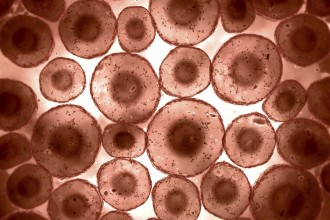
( a picture of animal cells under a microscope)


Well, it all started about 575 million years ago, a time called the Ediacaran Period, when primitive animals began to develop. Lumps of cells probably weren’t what you were thinking of when you thought of animals! But lumps of cells created the first animals on Earth. There are three educated guesses about how this happened.

Friday, April 8, 2016

A Letter to the 18+ STEAM Aficionados:


by Paola Salazar

PC: The Franklin Institute, Adults-Only Event guests

Please let it be known that you have not been forgotten! We have a lot of great events lined up for our more mature members in the CSF community. In fact, we’ve rounded up a couple of favorite events just for you!

I mean really, who ever said we were too old to find STEAM fun?


Sunday, March 27, 2016

Spider Superheroes

Hello CSF fans, followers, and supporters!


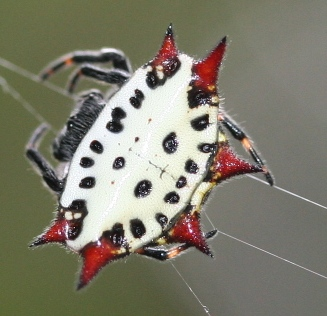
As the festival approaches, I was thinking about some of the awesome events we have going on just around the corner! Since this week’s theme is Earth and Nature, I was thinking about the Spider Superheroes event - an awesome, totally free event for Grades 1 to 4 at Harvard’s Museum of Natural History - all about spiders and the amazing things they can do.


Spiders are a special type of animal called an Arachnid that has eight jointed legs and lives mostly on land. They have inhabited Earth, as far as we know, for about 130 million years -- hundreds of millions of years before dinosaurs. They are carnivores, and detect their prey with the small hairs on their legs and body. Their sense of touch is exquisite, and probably the inspiration for Spiderman’s “Spidey Sense”.
Most spiders catch their prey by spinning webs from sticky silk they secrete in glands called spinnerets, on the back of their abdomen. Those that don’t spin webs either hunt for their prey, or wait for prey to pass by them while they are hiding.

Saturday, April 17, 2010

STOP THROWING AWAY ELECTRICITY!

The Truth about Phantom Loads

It’s possible that you might be paying for extra electricity without knowing it. You may have already cut back on your energy consumption in the typical ways, replacing light bulbs and purchasing energy-efficient appliances. Test your knowledge of home energy efficiency at the Energy Efficiency Game Show from 12:00 noon - 4:00 pm on Saturday April 24th at Cambridge Public Library, 449 Broadway, as part of the Science Carnival at the Cambridge Science Festival.


So is it possible that you might still be paying more for electricity than you actually use? Imagine this scenario: settling down on the sofa during a calm winter evening, you turn on your energy efficient floor lamp to begin peacefully reading,


Green Your Home All-In-One: For Dummies.


Just as you get to an exciting section on combination compost/recycling units, an intrusively loud noise erupts from the neighbor’s open window ripping into your thoughts. You look with disgust at their wide-screen television (150 watts) playing on full volume while their gas fireplace (1,500 watts) sends heat into the room and straight out the open window. Every light inside the house is on, not to mention they

are using incandescent bulbs (1,000 watts). The microwave (1,000 watts)

is heating some leftovers that you assume have been in the refrigerator (100 watts) for at least a week

while their

• cell phones charge (20 watts)

• their computers compute (100 watts)

• the DVD system plays (20 watts)

• the printer prints (50 watts)

• and the dishwasher washes (1200 watts)


GRAND TOTAL OF VERY UN-GREEN NEIGHBOR’S POWER CONSUMPTION: (5,140 watts!!!)


5,140 watts is the power you’d use to do 17 pushups per second. That’s 1000 pushups per minute! If they had to power their own house by doing pushups, at least they’d be in shape.


Your neighbor is wasting so much electricity, yet you manage a measly total of 10 watts just for your reading light. (You are wearing a parka because you don’t use heating anymore, and you gave also up refrigerated foods.) When you turn out the lights to call it a night, you think you’re using no power at all. Think again! It turns out the devices you have plugged in are using electricity without your knowing it. Your television and your microwave are off and yet they are leaking power from the outlets. They are acting as phantom loads.


Phantom Loads


Phantom Loads, also known as standby power, leaking electricity or vampire power, is the power that leaks into electronic appliances even when they are in the off or standby mode. Most electronics operate in standby mode the majority of the time, yet are still using power. A desktop computer for example uses 21 watts in sleep mode. When it is completely powered off, it still uses about 3 watts. You’d have to unplug the computer completely to stop this leakage! Take a look at this website for leakage rates of some typical household appliances.


Living in a house without heat or refrigeration, as in the scenario above, might be unreasonable. However, adding up the leaking power from some common appliances give surprising results.


These phantom loads total up to 23 watts with all appliance completely off. Sleep mode can add another 15 watts to a computer or 10 watts to a DVD player. The average US house uses around 1000 watts which means phantom loads account for more than 2% of the energy used by households. By some estimates (http://www.aceee.org/pubs/a981.htm), phantom loads comprised 5% of the entire US household power consumption amounting to a total of $3.5 billion dollars annually spent on wasted power. If the quantity of wasted power isn’t shocking enough, the amount of wasted money should be.


How the phantoms be stopped?


Surge protectors help. Plugging appliances into surge protectors and then shutting these off at night will eliminate phantom loads. Alternatively, unplugging the appliance would do the trick. Also, shutting electronic gadgets off completely rather than leaving them on sleep or standby cuts power consumption enormously. Again, replacing appliances with energy-efficient versions is a good way to contribute to energy conservation and to save $$.


This website tells you how you can check whether your home has phantom loads


http://www.kouba-cavallo.com/phantom.html


Check out these websites for more information on phantom loads:

http://www1.eere.energy.gov/consumer/tips/home_office.html

http://www.aceee.org/pubs/a981.htm

http://www.energy-saving-electronics.info/standby-power.htm