
Showing posts with label harvard. Show all posts

Sunday, March 27, 2016

Spider Superheroes

Hello CSF fans, followers, and supporters!


As the festival approaches, I was thinking about some of the awesome events we have going on just around the corner! Since this week’s theme is Earth and Nature, I was thinking about the Spider Superheroes event - an awesome, totally free event for Grades 1 to 4 at Harvard’s Museum of Natural History - all about spiders and the amazing things they can do.


Spiders are a special type of animal called an Arachnid that has eight jointed legs and lives mostly on land. They have inhabited Earth, as far as we know, for about 130 million years -- hundreds of millions of years before dinosaurs. They are carnivores, and detect their prey with the small hairs on their legs and body. Their sense of touch is exquisite, and probably the inspiration for Spiderman’s “Spidey Sense”.
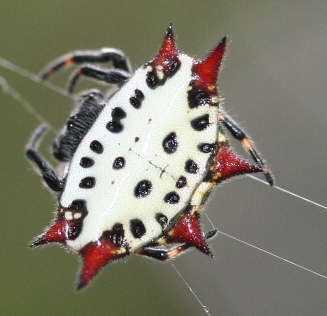
Most spiders catch their prey by spinning webs from sticky silk they secrete in glands called spinnerets, on the back of their abdomen. Those that don’t spin webs either hunt for their prey, or wait for prey to pass by them while they are hiding.

Friday, April 9, 2010

Big telescopes; Bigger Questions; and Really Big Mistakes

Imagine its 1930, and you’re a veteran Harvard astronomer, talking to ordinary folk about your work.
It’s the most exciting time in your field since Isaac Newton, but its surely sort of embarrassing too.
Those folk might reasonably say to you: “Hey, just ten years ago, most of you people thought our Milky Way galaxy was the whole universe – and now this Hubble fellow tells us there are billions of galaxies just like ours out there.”
Or – referring to Cecilia Payne - they could say: “What’s more, you people all thought the stars were made of IRON, like my CAR, until just last year, when a LADY – someone’s assistant! – proved they’re made of hydrogen gas, which couldn’t be more different! Have you got ANYTHING right?”
Now – in 2010, after a decade of equally stunning new discoveries – Harvard’s astronomers face a remarkably similar time of excitement and embarrassment.
Embarrassment, because – until very recently - astronomers thought they at least knew the basics of what the universe was made of.